 ScissorCV
Guide
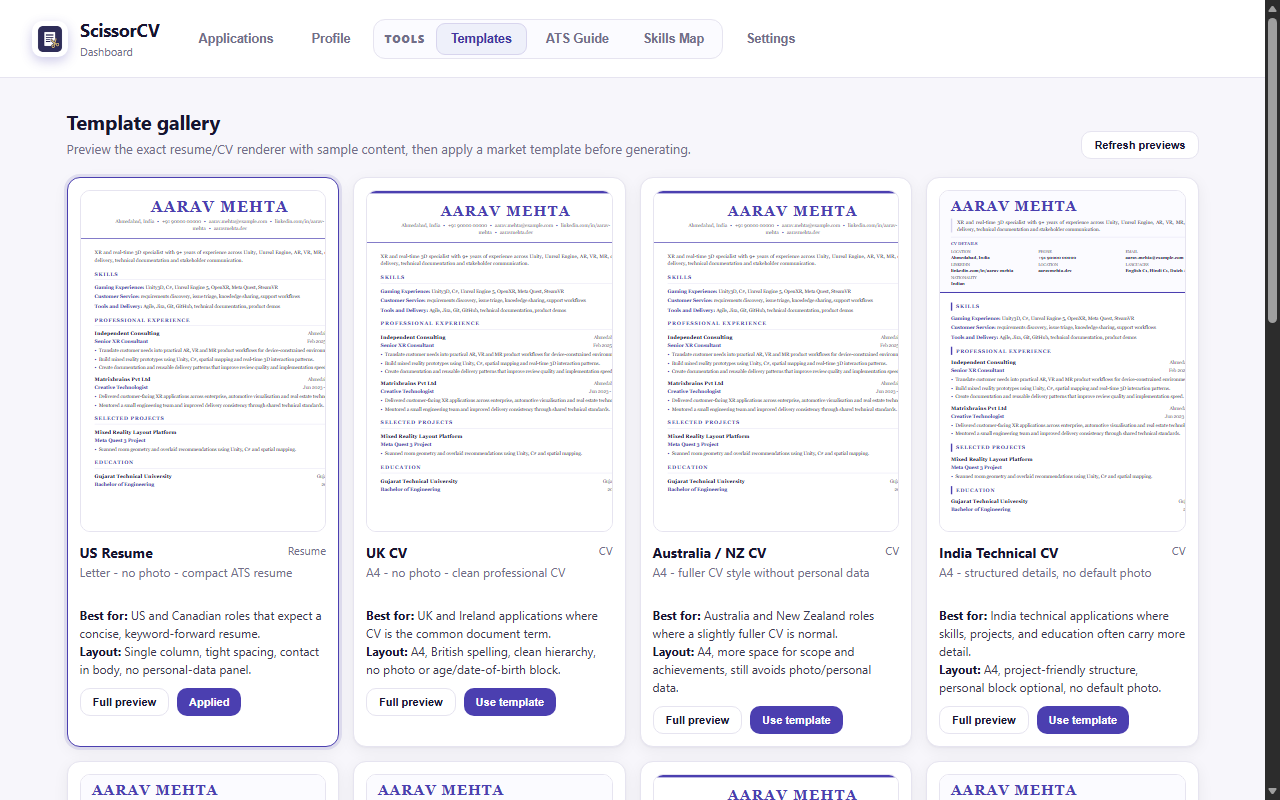
Regional CV formats, compared
The same career, six different documents. What changes between a US resume, a UK CV, a Europass-style CV, an Indian technical CV, and Canadian or Australian conventions.
A resume that works in Austin can get filtered in Munich, and a CV that works in Bengaluru can look overloaded in Toronto. The document conventions are genuinely different — length, photo, personal details, date format and what belongs in a header all change by market. ScissorCV treats each market as a separate renderer rather than restyling one template.
The single most expensive mistake: putting a photo, date of birth or marital status on a US or UK application. Many employers there discard such applications to avoid discrimination claims — while in parts of continental Europe a photo is still expected.
Resume and CV conventions by market
| Market | Typical length | Photo | Personal details | Dates | What matters most |
|---|---|---|---|---|---|
| United States | 1 page early career, 2 max | No | Name, city/state, email, phone, LinkedIn. No age, marital status or photo. | MM/YYYY | Quantified achievements, reverse-chronological, single column, no graphics. |
| United Kingdom | 2 pages standard | No | Name, city, email, phone. No DOB or nationality. | MM/YYYY | Short personal statement, UK English spelling, ‘References available on request’ is now optional and usually omitted. |
| EU / Europass style | 2–3 pages | Sometimes | Often includes nationality and DOB; photo common in DE, FR, ES, IT. | DD/MM/YYYY | Structured sections, explicit language proficiency levels (CEFR A1–C2), formal tone. |
| India | 2–3 pages, technical roles often longer | Sometimes | Commonly includes DOB, languages and sometimes marital status by convention. | DD/MM/YYYY | Detailed technical skills matrix, education with percentages/CGPA, notice period, current and expected CTC. |
| Canada | 1–2 pages | No | Name, city/province, email, phone. Human-rights codes discourage personal data. | MM/YYYY | US-style achievements plus work-authorisation clarity; bilingual roles in Quebec. |
| Australia / New Zealand | 2–4 pages, longer is normal | No | Name, city, email, phone; visa/work rights often stated. | MM/YYYY | Detailed role responsibilities, key achievements per role, referees commonly listed at the end. |
Market-by-market guidance
United States resume
One page unless you have ten-plus years of relevant experience. Lead every bullet with an outcome and a number. Single column, standard headings, no tables, no text boxes, no icons — multi-column layouts are the most common cause of a resume parsing badly. The word resume is used, not CV; in the US a CV means an academic publication record.
United Kingdom CV
Two pages is the norm and is not seen as padding. Open with a three or four line personal statement aimed at the specific role. Use UK spelling — organisation, programme, analyse — because it signals fluency with the market. Salary expectations belong in the cover letter, not the CV.
EU and Europass-style CV
More structured and more formal than an Anglo resume. Language proficiency should be stated in CEFR levels rather than words like fluent. Germany, France, Spain and Italy still commonly expect a professional photo; the Netherlands and Nordics increasingly do not. Dates run day-month-year, and a chronological gap is expected to be explained.
India technical CV
Detail is expected rather than penalised. A dedicated technical skills section grouped by category, education with percentage or CGPA, and explicit notice period plus current and expected CTC are all standard, because recruiters screen on them directly. Certifications carry real weight and should be listed with issuing body and year.
Canada
Close to the US format, with two differences that matter: state your work authorisation status plainly if it is not obvious, and keep all personal identifiers off the document, since provincial human-rights codes make employers wary of receiving them. For Quebec roles, French proficiency is often the deciding line.
Australia and New Zealand
The most verbose convention of the six. Three pages is unremarkable, and recruiters expect both responsibilities and achievements for each role rather than achievements alone. Named referees at the end are still common, and visa or work-rights status is normally stated up front.
How ScissorCV handles this
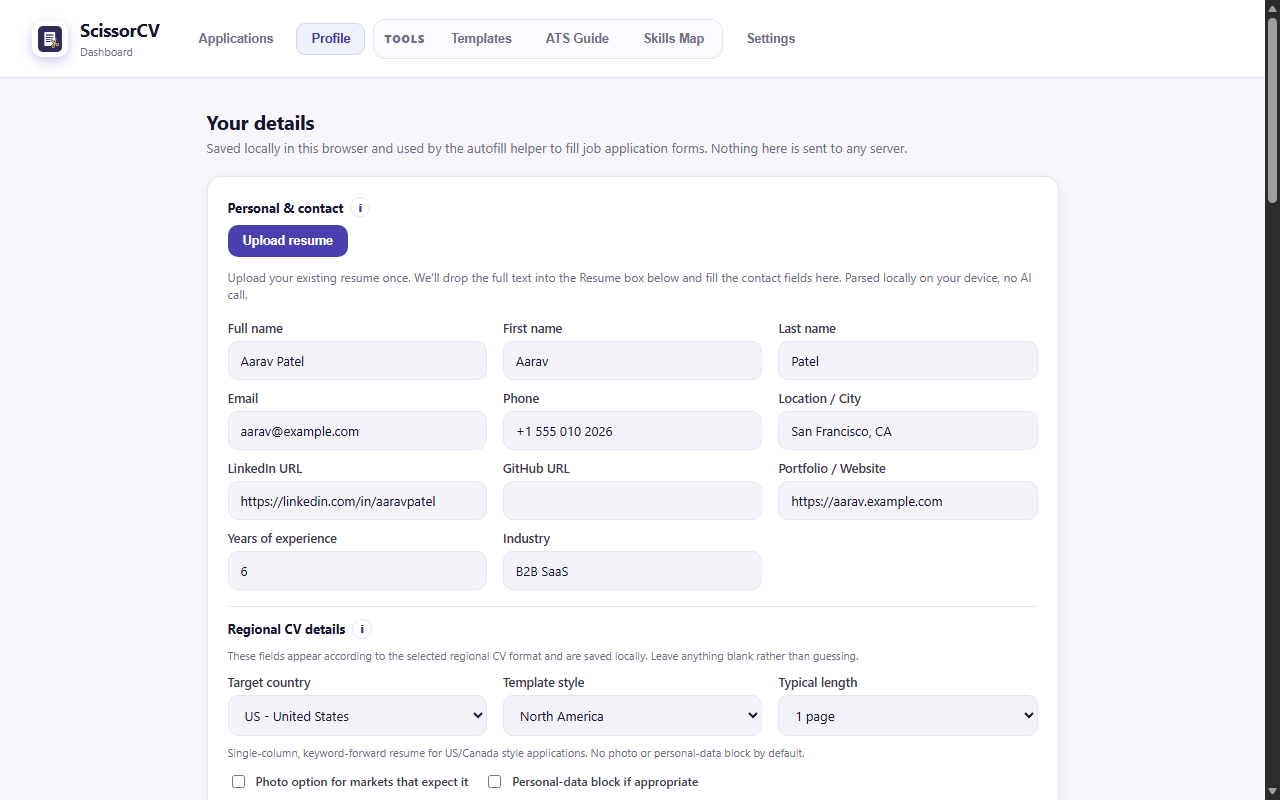
Choosing a market in ScissorCV changes the renderer, not just the CSS: section order, which personal fields are emitted, date formatting, length targets and heading vocabulary all switch together. The underlying evidence ledger stays the same, so you are never re-entering your history to produce a second format — and Truth Guard applies identically in every market.